Medical News Blog Information

Showing posts with label Middle East respiratory syndrome. Show all posts

MERS simmers down in South Korea...did we learn anything this time?

No new cases reported in 8 days and the most recent known date of illness onset now 10 days ago, are good indications that the Middle East respiratory syndrome coronavirus (MERS-CoV) hospital-driven outbreak in South Korea is pretty much over. At the least, it's contained. Finally.

Roughly speaking - based on the data from the South Korean Ministry of Health and Welfare, the World Health Organization and KBS news - there were four rounds of infection. In all, 186 cases of MERS have been reported, with 36 (19.4%) resulting in death up until the 13th July AEST:
MERS case spread among hospitals in South Korea
between the 11th May and the 19th June.
Cowling et al. Eurosurveillance Vol 20,
Issue 24, 25-JUN-2-15.
[4]
Click on image to enlarge.

  • the 1st round was the person who flew into South Korea after visiting all over the Arabian Peninsula - he became ill on the 11th of May.[1,2]
  • the 2nd round included approximately 45 cases.[3] This group started becoming ill on the 19th of May, continuing until the 4th of June.[5]
  • the 3rd round included approximately 108 cases.[3] These people started showing signs and symptoms of disease between the 27th of May and the 13th of June.[5] 
  • the 4th round included approximately 22 cases.[3] This group became ill between the 5th of June and the 2nd of July.[5]
We've learned a few things (perhaps "relearned"?) and had a few things reinforced (even more) during this latest successful test of our healthcare systems ability to defend against a case becoming an outbreak...successful from the coronavirus' point of view that is. 

For example we saw that..
MERS-CoV detections, deaths, sex and age distribution in
the South Korean hospital outbreak.
From my MERS-CoV in South Korea page.
Click on image to enlarge
  1. MERS-CoV doesn't spread efficiently between humans - over 16,100 contacts did not develop MERS.[6] 186 did.
    While there were probably more infections among contacts (and future studies from South Korea will hopefully investigate and answer this), disease did not develop among many of those exposed to infected people.
  2. Closing schools, wearing masks in public, putting thermal imaging cameras in office buildings and quarantining zoo camels when not a single case has been acquired without link to a hospital was an exercise in failed communication between government and public.
    There was no indication that any of these costly, high profile measures prevented any transmission. There was also no point to them, precisely because transmission outside the hospital setting did not occur.[3]
    We have to learn to talk more, more often, and more clearly to our populations about the realistic risks of a new and scary virus when it shows up on our shores. We need to build trust here. Trust and respect takes time to build. In these outbreaks, we're always forced to rush because we seem incapable of investing in this before an event. Gods forbid we'd teach these concepts at school. We need to make a bigger deal about educating and informing our public about virus transmission. That is best done if the materials and the processes to roll the messages out to the public are already in place
  3. Holding back information that you have already collected doesn't build confidence in you.
    Whether that is not releasing the name of a hospital or the detailed data about deidentified cases, or presenting a list without discussion, engagement or correction when necessary 
  4. Hospitals are great places to spread infections, if infection control is not constantly running.
    Viruses aren't big on forgiving. Neither are zombies. The undead really suck that way. But the truth may well be that hospitals need to be on guard, cleaning surfaces and in PPE 24 hours  day, 7 days a week if they are dealing with cases of infectious disease that can be expelled from a human in the form of coughing, sneezing, bleeding or vomiting. Judging whether to use "standard precautions", "droplet precautions" or "airborne precautions" at some point after a coughing and sneezing patient has been sitting in the waiting area for hours, is going to be too little too late to stop new healthcare worker infections
  5. Allowing the public - that is, the otherwise healthy - to co-care for patients within hospitals and to sleep in rooms or wards with infected people expelling virus (as per #4) - is a bad idea if trying to contain an acute viral infection
  6. People with other underlying diseases get more seriously sick after MERS-CoV infection.
    Adult health in richer nations is not in a good way. When a wimpy spreader like MERS-CoV comes to town, it may do little damage to the young and otherwise healthy population, but we are not all healthy. 
We all have a role to play in protecting those among us who will suffer more greatly from an otherwise simple acute viral infection by even a rare and obscure camel-cold virus. Whether that is getting a vaccine to prevent us from becoming a hijacked virus production facility, being mindful of others when we cough and sneeze, or seeking out information from trustworthy sources to learn about the realistic threats from a new (or old) virus when it comes to town, we can all make some difference here. 

At some point, one of these viruses may well be better at hopping between us and may cause severe disease not just in those who have an existing ailment. If that day comes, we have proven yet again, that no facet of our response will be up to the task of halting its spread. 

We're not ready.  

But hey - that virus' arrival is probably many, many cycles of leadership change, war, and petty bickering away yet. We'll be ready by then. Right?

References..

A good week for viruses...not so great for humans...

Edited for clarity 25MAY2015
Middle East respiratory syndrome coronavirus (MERS-CoV) managed to get out for some sightseeing - travelling to South Korea this week - and Ebola virus|Makona was given a helping hand to spread to new people in Guinea and Sierra Leone with a small splurge of new confirmed cases.

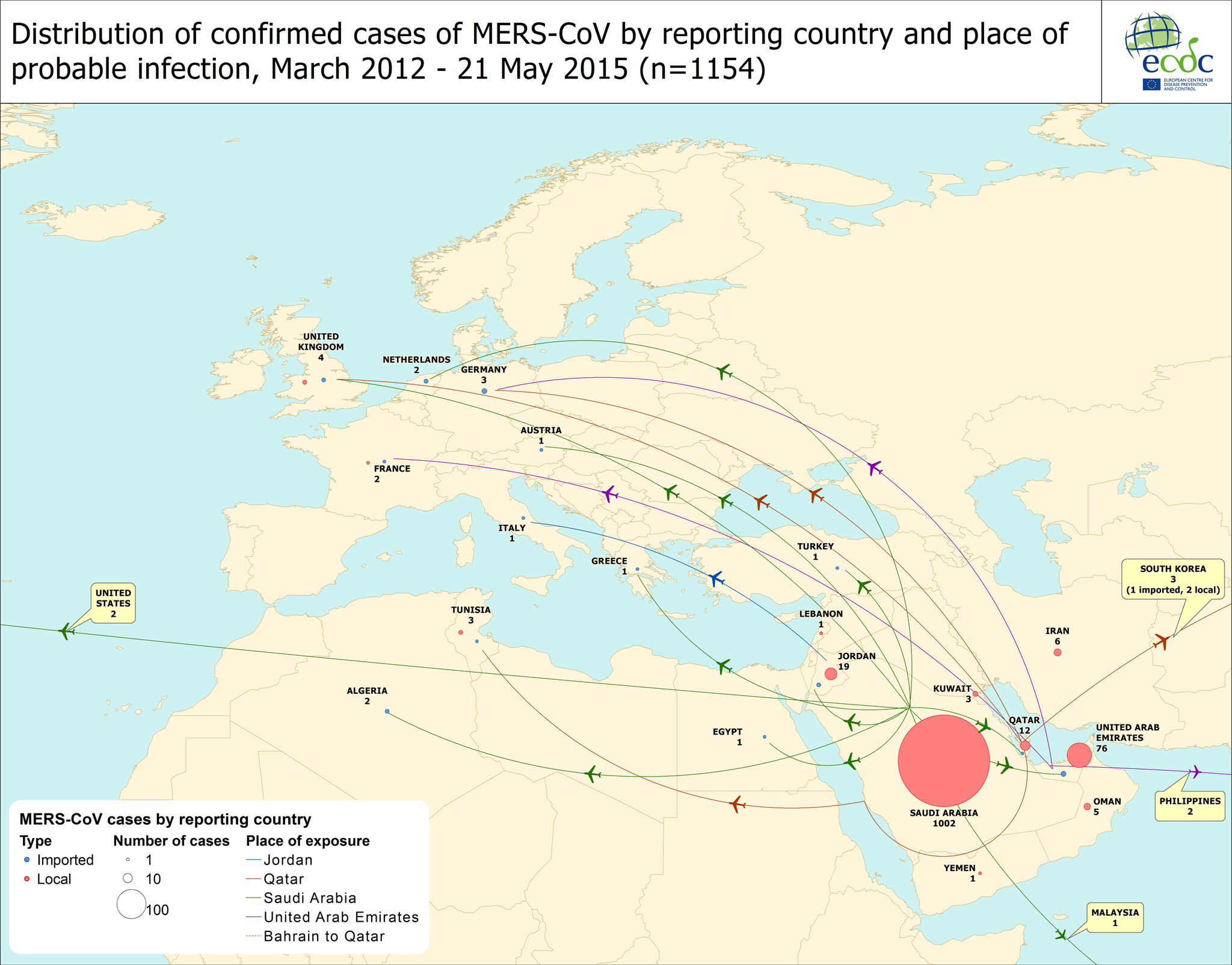
MERS has now trickled into 24 countries world wide as shown in the European Centre for Disease Prevention and Control's (ECDC) epic 'travel-by-plane' map.

Media preview
The original of this is created by the ECDC and is presented here.
Click on image to enlarge.
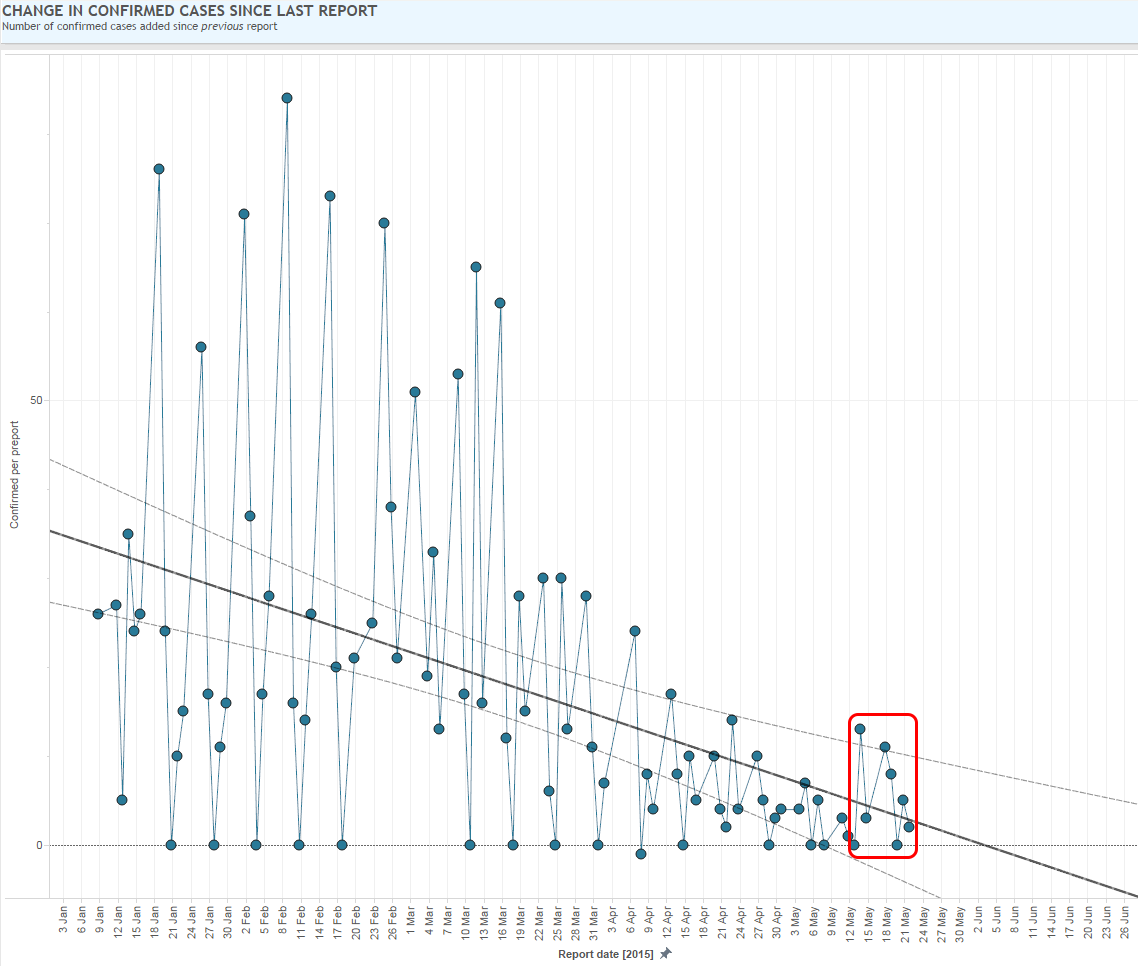
Meanwhile, a crude extrapolation from current Ebola virus disease (EVD) case numbers saw the predicted date when we might reach zero cases, move further into June. 

This could pull back again or it could move further away if the EVD clusters and sporadic cases continue to spread. We can't model that because it's entirely down to unpredictable human variables. We can list what those are, we can better prepare for them, we can educate about them and how to prevent them and we can acknowledge that they are real, but we cannot know when and in what mix they will come into play.

Extrapolation of the public data for confirmed Ebola virus disease cases from
WHO. The most recent week is boxed in red and bucked the trend of declining
 cases. To see how I made this please visit here.
Click on image to enlarge. 
The newest EVD cases remain mostly clustered around the Forecariah prefecture of western Guinea, on the north west border with Sierra Leone but also 5 new cases appeared in the north west of Guinea in Boke prefecture, which borders Guinea-Bissau. 

Geographical distribution of new and total confirmed cases
From the World Health Organization's Ebola virus disease Situation Report, 20MAY2015.
Click on image to enlarge.
Since the last EVD SitRep, two days of reporting have seen fewer cases than in the same two days of the week before. 

So there's that. 

Quickly reporting what is actually happening is invaluable for all sorts of reasons. Modelling and prediction allow us to get ahead of the virus. But having the data, and having them available publicly remains a challenge for every country and for every outbreak. 

Public health data are about the public's health. If it has been considered worth collecting and collating, why not communicate it too?

Where did the MERS-CoV comorbidity and animal contact fields go...? [UPDATED]

Is this the work of the US CDC and other visitors helping the Kingdom of Saudi Arabia (KSA) Ministry of Health (MOH) resolve their Middle East respiratory syndrome coronavirus (MERS-CoV) problem? Is it an arbitrary reporting change by the Command and Control Center (CCC)? Is it someone forgetting to unhide the relevant columns in their spreadsheet?
Changes to the KSA MOH MERS-CoV public 
reporting detail after 17-March-2015.
1. The MERS-CoV graph changed scale and caught up.
2. Three fields disappeared: pre-existing disease, 
animal exposure and contact with a known cases 
within a hospital setting
3. The promise of weekly updates was dangled-
without reference to a host site.
Click on image to enlarge.

I don't know why, but since 17th March, the KSA MOH MERS-CoV reports have stopped posting information about whether each newly announced MERS case had a comorbidity and whether they had animal contact. Granted, the last field was almost always "No" or "Under Investigation" - and thus of little use (we rely almost exclusively on the World Health Organization reports to provide useful animal data) - but I wonder why the MOH has chosen to stop posting even the heading this month? 

The much more epidemiologically significant description of whether the case was an "expat" or a "Saudi" citizen remains - whew! 

And the MOH has continued to do away with all of that pesky detail that might allow an observer to link a death to a previously announced case. Thank goodness we don't have that clutter to deal with - or the details from the found113 which I presume are now completely lost in the sands of time. 

I guess the removal of these latest 2 data fields is just all part of providing the world with more of that full transparency and up-to-date information about this emerging pathogen - like the MOH "News" page - all the latest info you could want from August and earlier is to be found there. 

Oh well, at least you can get the latest from the weekly updates...if Google Translate's efforts can be understood.

It really isn't as hard as it is being made to look to get the reporting aspects right.

MERS in the UAE...

Over my weekend, the Robert Koch Institute (RKI) in Germany reported that they had a Middle East respiratory syndrome case (65 year old returning German) under their care, imported from the United Arab Emirates (UAE).[1,2]

There have been two other MERS cases hospitalized in Germany - 1 from Qatar and the other originating from the UAE, where infections are presumed to have been acquired.

This latest case is nothing astonishing but it does act as a warning that there most likely are other MERS cases circulating in the UAE. Alternatively, this person may have visited the Kingdom of Saudi Arabia (KSA) before travelling to Germany, acquiring an infection there. 

When cases emerge in other countries they can be very telling. They speak of what might be happening in the host country. The UAE has only reported (this is the important word for any outbreak observation) a single case since July last year. Was RKI just "lucky" to pick up the only other MERS-CoV case in the UAE over the past 8 months? Highly doubtful. In the absence of other information (WHO detailed data will surely follow soon), it is much more likely that MERS-CoV is circulating in the UAE, as it is in the KSA and possibly neighbouring countries, but that cases are going either undetected or unreported.


When animals were described alongside human cases.
Click on graph to enlarge.
Taken from MERS number page.
Current MERS-CoV circulation would be in keeping with the popular theory that MERS is a seasonal zoonosis (animal infection that spills over to humans causing disease on occasion), and that more primary human cases, although still relatively rare, emerge during periods when more infections are occurring in camels - which seems to occur around this time of year. That seasonality in camels has not really been established yet and still it is one popular theory among those who do not completely deny any involvement of camels in MERS whatsoever. Also worth repeating is that MERS-CoV appears to be inefficient at transmitting between people - at least so far as the testing done to date has revealed.

From the rare spillover cases acquired by humans from camels, humans proceed to do the lion's share of the work in continuing to spread MERS-CoV among humans. Yay us. 

In recent WHO disease outbreak news reports [3,4], the detailed information reveals multiple instances of cases having shared wards with laboratory-confirmed MERS-CoV cases - and despite assurances that the same healthcare workers did not attend both people, some form of contact has apparently occurred somewhere, somehow. The precise details of what that contact was, still seem to be beyond the capacity of the Saudi disease detectives to capture. But in that detail lies some important hospital (or community) transmission clues - even if those clues are as simple as revealing that the wring question are being asked, too few contacts are being tested, healthcare workers movements are not being tracked sufficiently, or finding that people (patients, contacts and healthcare workers) do not answer the question fully. 

A little thing called infection prevention and control is apparently still not being adequately adhered to in some parts of the region. 

In other words, MERS is a rare but preventable disease.

References...

  1. Flutrackers post
    https://flutrackers.com/forum/forum/novel-coronavirus-ncov-mers-2012-2014/germany-coronavirus/726247-germany-reports-3rd-imported-mers-cov-case?_=1425773133137
  2. Robert Koch Institute [German]
    http://www.rki.de/DE/Content/InfAZ/M/MERS_Coronavirus/MERS-CoV.html
  3. WHO MERS DON 06MAR
    http://www.who.int/csr/don/6-march-2015-mers-saudi-arabia/en/
  4. WHOMERS DON 23FEB
    http://www.who.int/csr/don/23-february-2015-mers-saudi-arabia/en/


MERS-CoV snapdate...

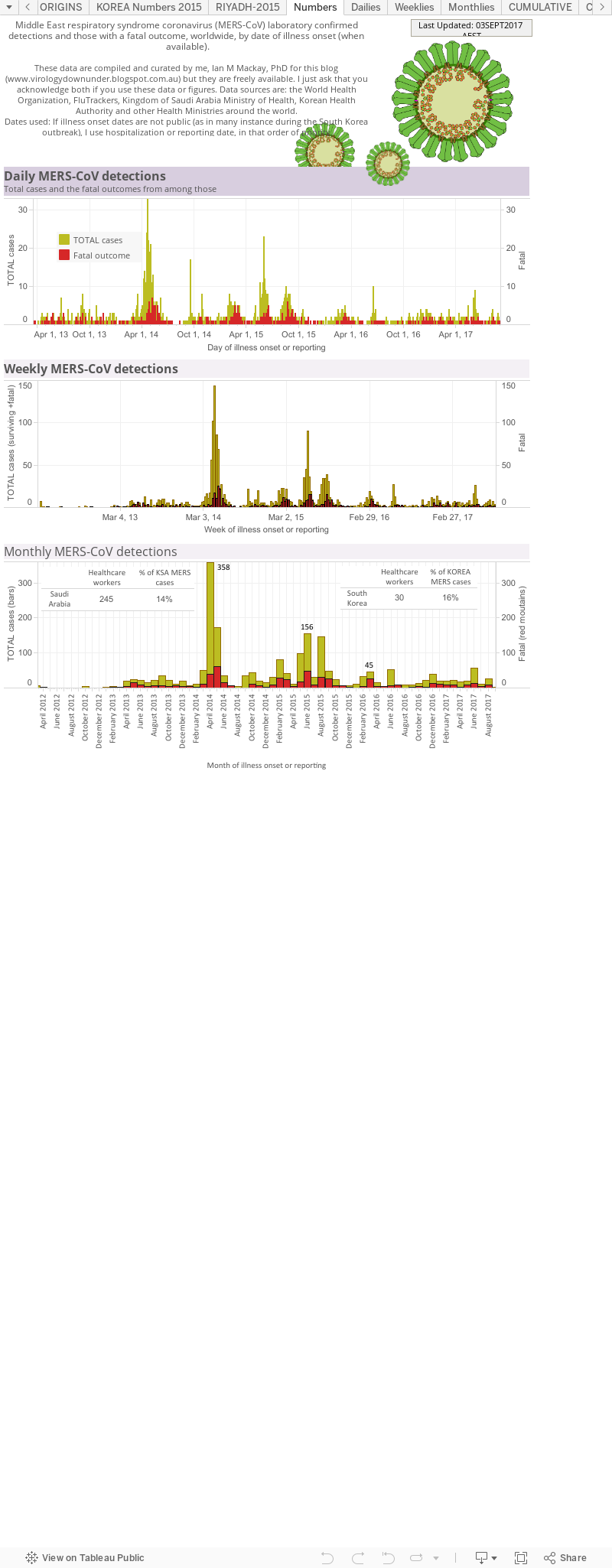
MERS-CoV detections by month and year

As can be seen from the graph below, the peaks of MERS-CoV detection have been driven by humans and their infection prevention and control issues - but what maintains the virus in between those lapses? 


It seems clear that MERS-CoV is entrenched among camels in the Middle East and Africa but how is it getting to humans, and how is it dong that in such small numbers over such a wide area? These have been questions for 148 weeks. 

It's a good thing this infection transmits so poorly between humans.

Click on image to enlarge.

MERS risk reduction and signs of illness to watch for during hajj and umrah...

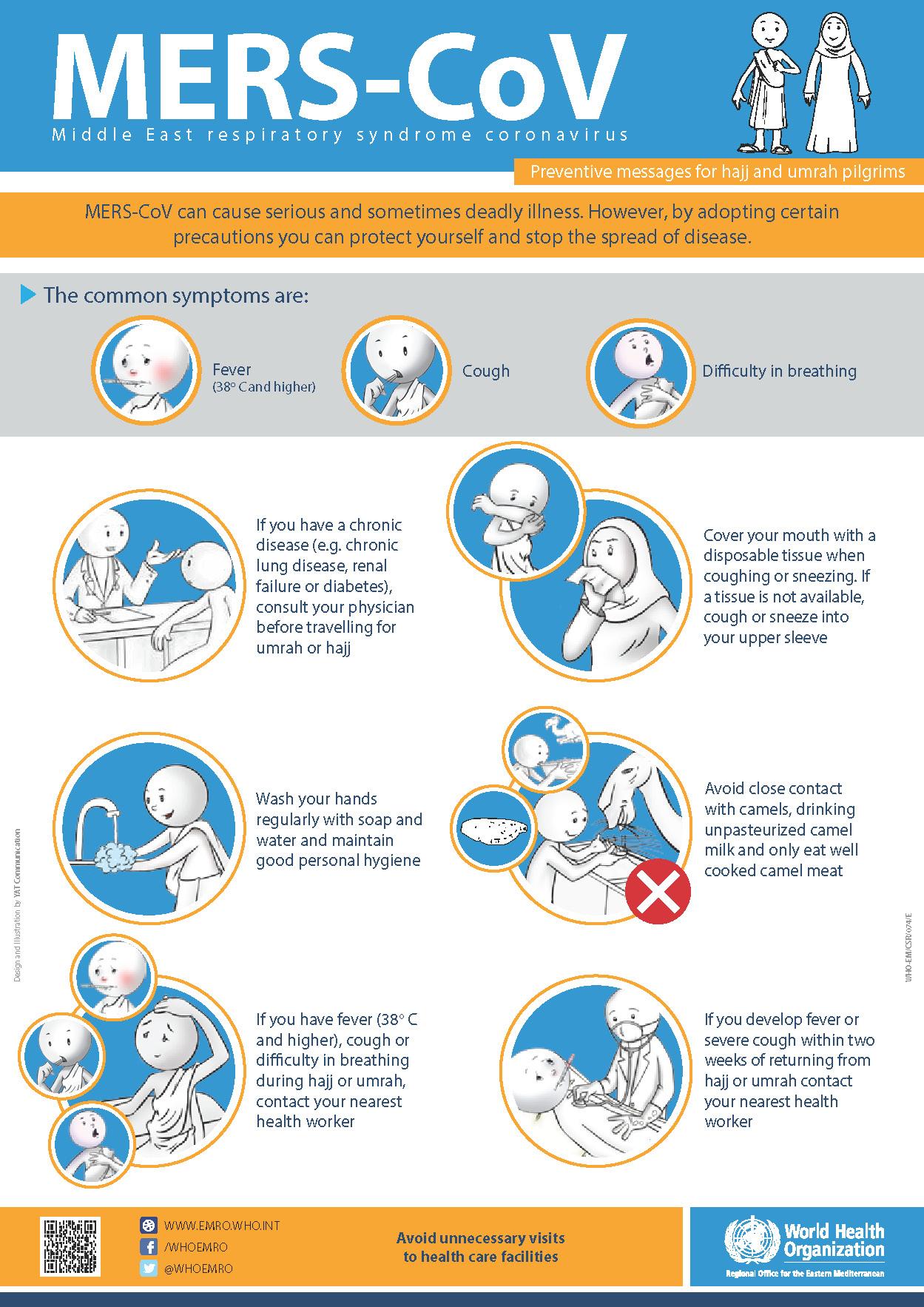
I love a good infographic and this one ticks a lot of boxes for getting a clear message out about the Middle East respiratory syndrome (MERS) disease and how to avoid catching and spreading the MERS-coronavirus (MERS-CoV).

Thanks World Health Organization.


World Health Organization poster describing risk of infection
 and how to identify when you might have MERS.
Of course, I'd be happier if the poster specifically suggested putting more distance between people and potentially infected camels, rather than just avoiding "close contact".

Granted, close contact can include spending time in the close, but not physically connected, "personal space" of a camel. But "close contact" is, in my opinion, one of those infectious disease terms that needs to be made more simple and clear. Like "aerosol" and "airborne", "close contact" gets a little lost when translated to the people who are at actual risk from infection.

Happy 2nd birthday Middle East respiratory syndrome coronavirus (MERS-CoV)...

Its been 2-years since Prof. Ali Mohamed Zaki sent his email to ProMED notifying them of a novel coronavirus. That email was published 20-Sept 2012.[1] 

A year ago we had 138 cases and 58 deaths. Today we have 856 cases with perhaps 306 fatal (36%).

I won't rehash what I said a year ago - I invite you to check that out over at the 1st birthday post.[2]

Suffice to say the past year has been, to my mind anyway, mostly about:

  • Camels
  • High level job "shuffling"
  • Controversial parallel publications
  • Very problematic infection prevention and control issues.
The latter leading to the relatively huge number of MERS-CoV detections and deaths in Saudi Arabia and to some exported detections and cases. The one constant over both years has been that the MERS-CoV is a pitiful spreader among humans. MERS-CoV is nonetheless a virus that is very capable of inducing fatal outcomes, especially among older males with underlying diseases.

Has MERS-CoV gone away? No. Of course it hasn't. MERS has, mostly. That's the disease, not the virus. For now anyway MERS cases are sporadic, although still geographically widespread. 

MERS cases fell to zero cases per week for a number of weeks this year following containment of the Jeddah-2014 outbreak. Nonetheless, this is a virus of camels that seems to  spread, rarely, to humans and when in us, it has not been in any rush to mutate into the pandemic SARS-like threat many once worried about. 

Camels are where this virus likely remains. And there have been no signs that that has in any way changed. The latest information suggests camels have been harbouring MERS-CoV for at least 30-years.[3] This, as with a great deal of the research to date, is knowledge gained mostly thanks to the efforts of international research teams and their funding

So Happy 2nd Birthday you opportunistic, spiky little killer. I'm once again wishing Dr Zaki well and congratulating him on co-parenting the birth of this novel coronavirus. This year I also wish Prof. Ziad Memish well and congratulate him on seeing the infant virus through to toddler age.

Oh, and 2-years on, I still see no sign that the contentious patenting issues were any sort of hindrance to diagnostics or actual research. Just sayin'.

References...

  1. http://www.promedmail.org/direct.php?id=20120920.1302733
  2. Happy 1st birthday Middle East respiratory syndrome coronavirus (MERS-CoV)http://newsmedicalnet.blogspot.com.au/2013/09/happy-1st-birthday-middle-east.html
  3. MERS Coronavirus Neutralizing Antibodies in Camels, Eastern Africa, 1983�1997
    http://wwwnc.cdc.gov/eid/article/20/12/14-1026_article

MERS-CoV: maps, totals, sex, age and different populations

This is a static page - the internet address won't change, just the charts as I add new numbers and update them. The page will follow Middle East respiratory syndrome coronavirus (MERS-CoV) detections by day, month and the cumulative tallies, worldwide and focus on subset of the numbers that are public available. That means these graphs are at the mercy of each nation's willingness to provide basic, deidentified (so patients are never publicly identified) information. At a minimum these could include:

  • a unique case identifier (preferably in collaboration with country where diagnosis was confirmed and used by all)
  • age
  • sex
  • date of illness onset (DOO; when they first became ill; preferred value to use top plot cases along the bottom axis of the graph)
  • date of hospitalization (DOH; if no DOO - the I plot using this*)
  • date of laboratory confirmation
  • town & country of diagnosis
  • whether a healthcare worker
  • whether underlying disease (comorbidities) were present
  • animal contact if a possible or known zoonotic disease
*If no DOO or DOH - then I plot using the date of reporting.

Data visualization ("viz") 1.
This breaks down the living (yellowish) and dead (red; when they died) people from which MERS-CoV was confirmed by a laboratory, either as viral RNA-positive using RT-PCR or by the detection of an antibody response. The graphs also show the counts as per day, per week and per month to cover a range of different 'ways' of looking at the numbers. In the Monthlies graph, I have nested a Table that shows how many healthcare workers (HCWs) have been infected and that that equates to as a proportion (%) of all detections from that country.


Data viz 2.
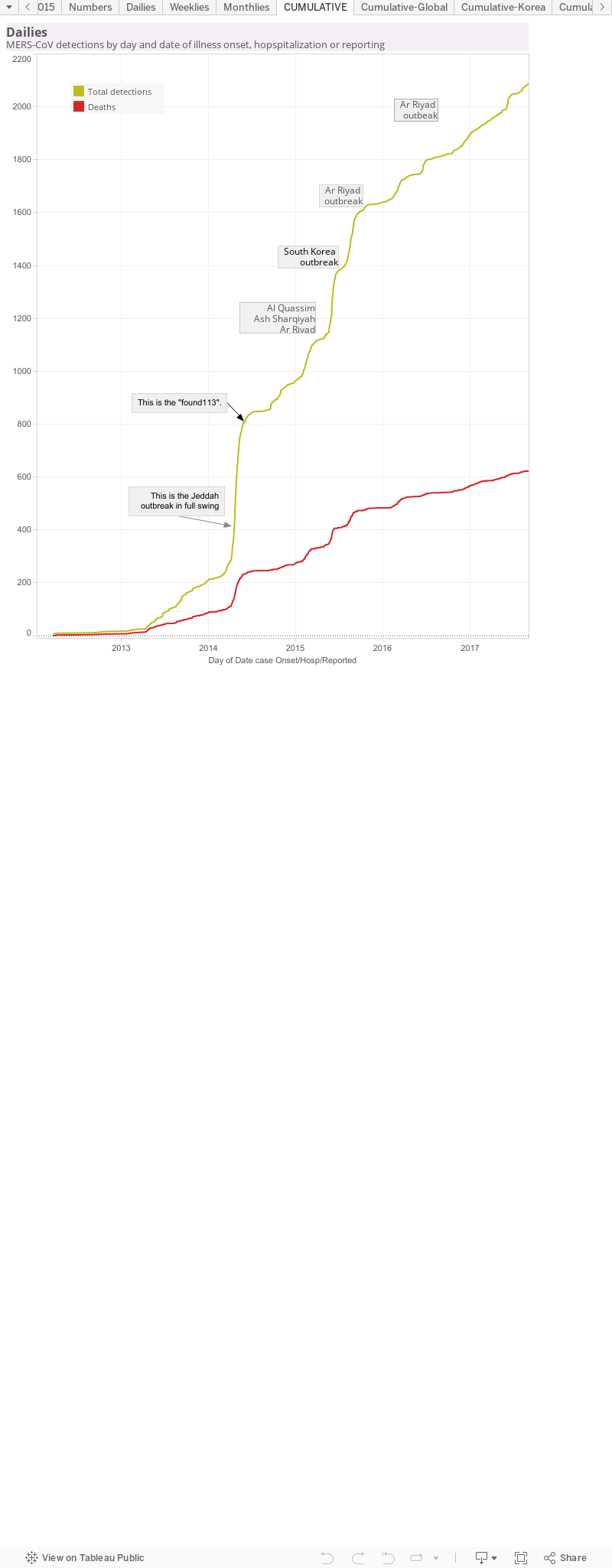
This is a cumulative curve, It adds the newest case numbers to the total from the timepoint before and so it shows the growth of cases - in this case, of all MERS-CoV detections worldwide. I've marked some pints of interest. These are usually clusters or outbreak and cause a sudden rise in case numbers, seen as a steep curve; a change in rate of case growth. As the cluster or outbreak resolves, the curve "slows down" which can be seen as it levelling off to a horizontal line.


Data viz 3.
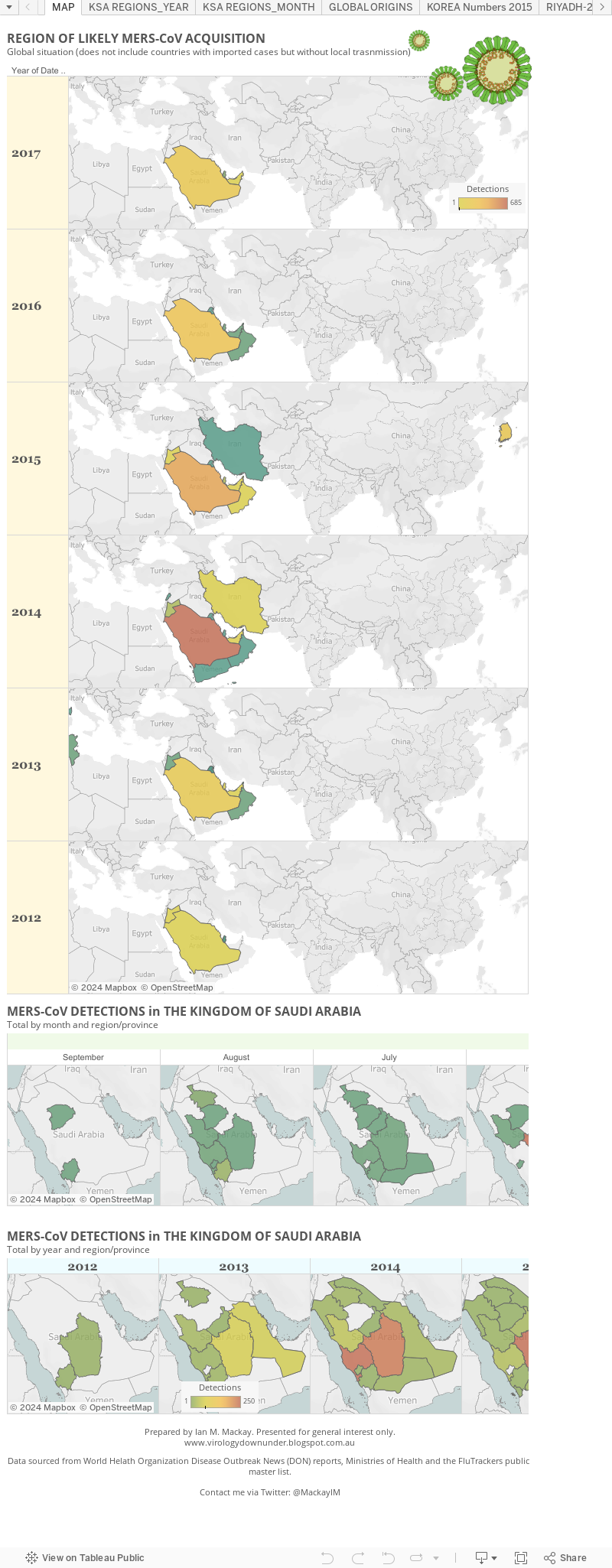
The maps of MERS. This shows the global situation as it relates to countries in which local spread has occurred. It doesn't show countries that have had a case arrive but from which no secondary cases arose. Below that I focus on the monthly MERS-CoV detection totals in The Kingdom of Saudi Arabia - where most cases have occurred. On this panel you can use the slider to trace the regional case loads back though time. The final graph depicts the Kingdom's case load but by year and region; there is also a slider at the bottom go the graph. Both of these last two graphs use a heatmap approach to highlight the hotzone(s).


Data viz 4.
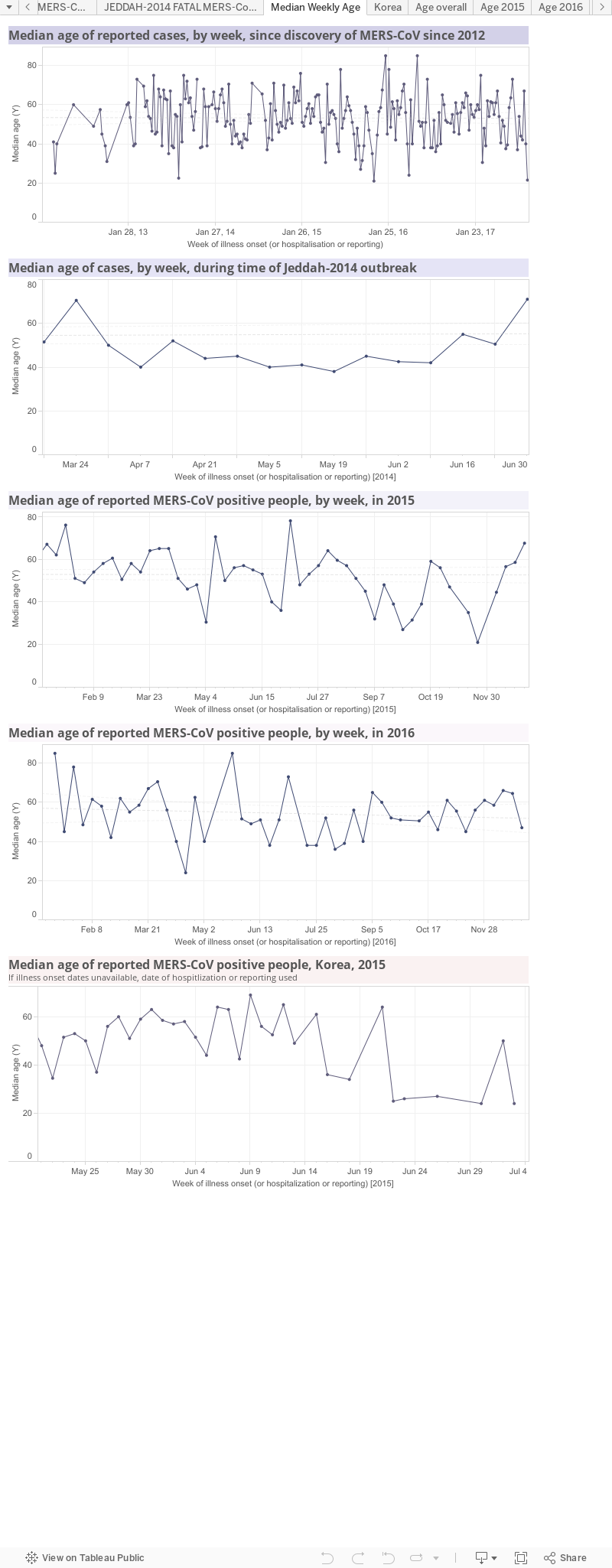
MERS by age. These four panels show median age over time. The 1st panel follows MERS-CoV since its discovery; the 2nd panel focusses on the period of the largest outbreak, associated with hospitals, in and around Jeddah in 2014; the 3rd panel looks just at 2015; the 4th panel looks at the age of cases in the 2015 South Korean hospital outbreak.


Data viz 5.
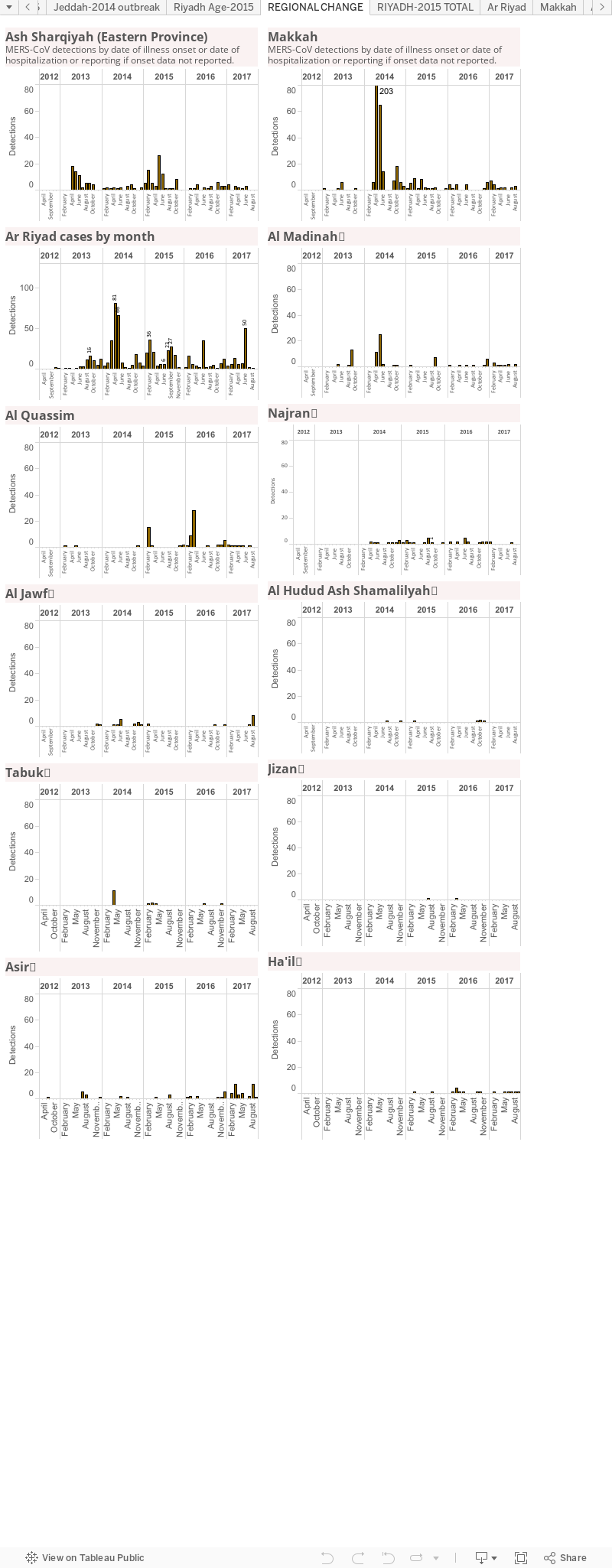
MERS by region of the Kingdom of Saudi Arabia. This is another way to track which region or province is the hottest spot. It does not account for the creation of "MERS-specific clinics or hospitals to which cases from other regions may be being transported.


Data viz 6.
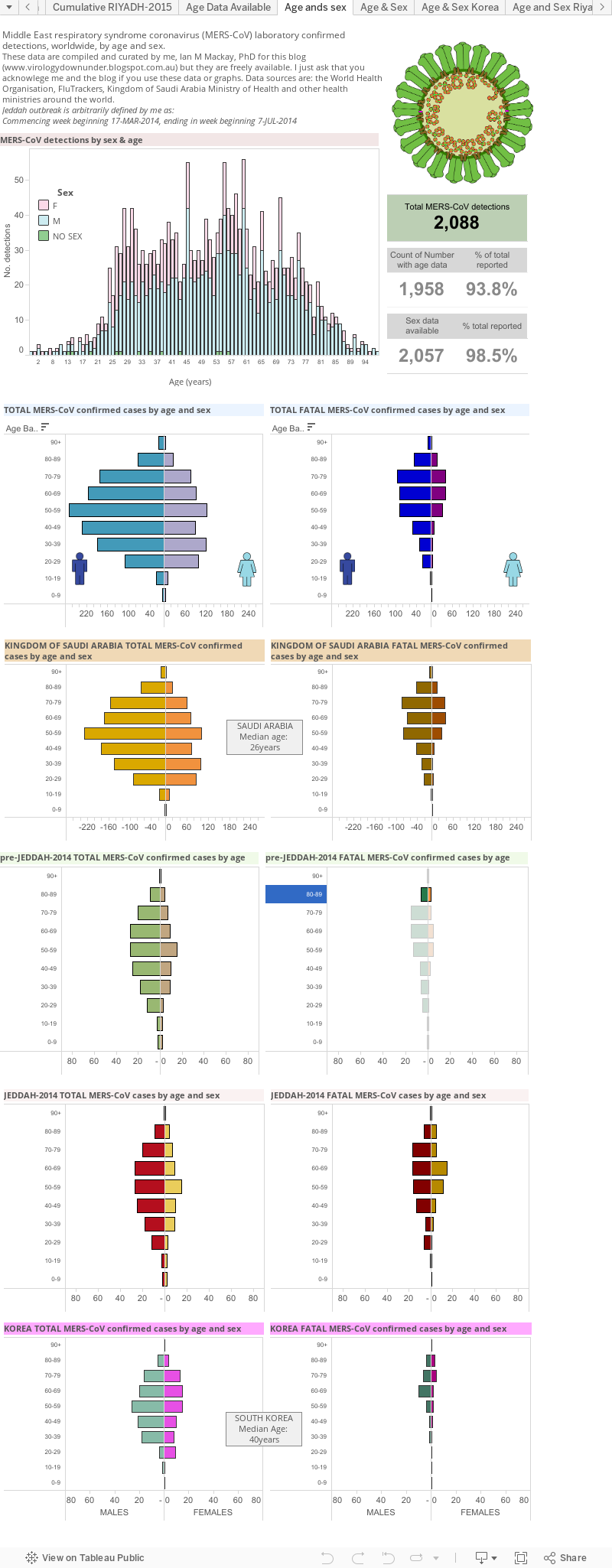
MERS by age and sex. This includes a table of the current global total number of MERS-CoV detections and highlights the gaps in my line list of age and sex data. 
There is a global age and sex bar graph (male-blue;female-pink-sorry; green-no sex data). 
Next are age/sex pyramids for the world, the Kingdom of Saudi Arabia, pre-Jeddah and then the Jeddah and South Korea hospital outbreaks.
These graphs highlight the different distributions during times of sporadic cases or times of clear outbreaks. They also highlight that more cases are male and show some difference between cases and fatal cases as well as differences between Saudi Arabia and an outbreak in another country-highlighting how important the health of the community is to the impact of the same virus.


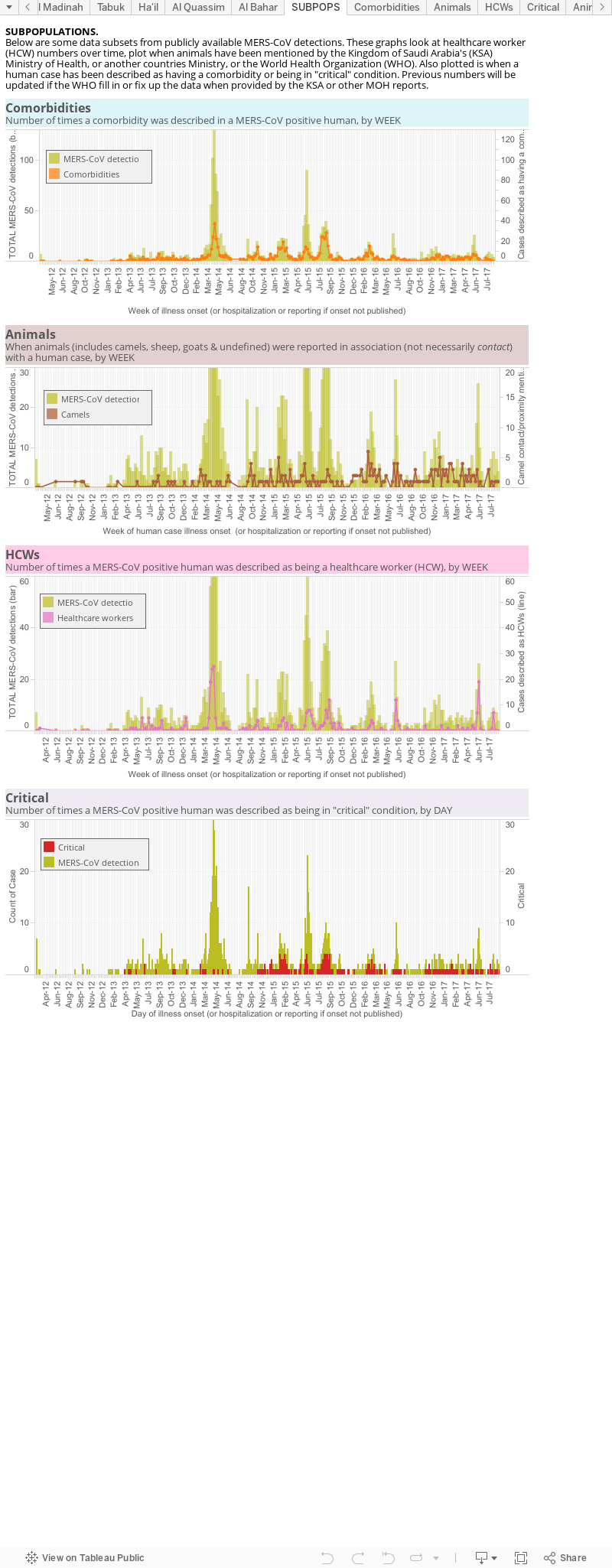
Data viz 7.
This is an odes and end viz of some subpopulations. 1st there is a panel looking at the number of comorbidities over time (orange line) against the total case numbers (pale brown mountain), globally; 2nd is the number of times an animal (brown), or specifically a camel (yellow), is mentioned alongside a case; 3rd is a plot of the cases identified as having a role in healthcare, again against a backdrop of the total MERS cases worldwide. This lets us see increased spillovers and, usually with hindsight, associate them in time with a spike in cases. It also shows the intimate relationship between MERS and the healthcare environment as healthcare worker numbers spike along with an overall rise in cases.

Data are derived from the World Health Organization, FluTrackers and various Ministries of Health.
The chart above, as with all on VDU, is made for general interest only. It is also freely available for anyone's use, just cite the page and me please. 

Middle East respiratory syndrome coronavirus (MERS-CoV): summing up 100 weeks

We stand at 182 cases with 78 deaths. The proportion of fatal cases (PFC) stands at 43%.

  • Median age of all cases, including deaths, sits at 53-years (missing data on 13 cases); median age of fatal cases is 60-years
  • 47% of all MERS cases with data are >55-years of age; 36% are >60-years
  • 65% of cases are male (missing data on 18 cases)
  • Underlying comorbidities feature in most severe disease MERS cases
  • Approximately 18% of MERS-CoV cases are in healthcare workers; 2.7% of all fatal MERS cases are HCWs
  • 81% of case are from the Kingdom of Saudi Arabia (KSA); the Arabian peninsula is the zone of case origin
  • Reliable real-time reverse transcription polymerase chain reaction (RT-rtPCR) assays exist for detection, confirmation and genotyping
  • Camels have been found on multiple occasions at multiple sites in the region to have antibodies to an antigenically similar virus to the MERS-CoV and nasal swabs have been found to be MERS-CoV RNA positive, as have humans in contact with the same camels (infection direction unknown). 
  • Camel, goat, monkey, alpaca and human cells lines efficiently replicate MERS-CoV (multiple intermediate sources?)
  • 1 diagnostic sequence of MERS-CoV RNA has been identified in a Taphozus perforatus bat (origin of animal other infections?)
  • MERS-CoV uses DPP4 (CD26) as its receptor on host cells, a molecule found on some cell lines and epithelial cells of kidney, small intestine, liver and prostate. DPP4 has a standard role in hormone and chemokine activation
  • No viable antiviral therapy or cocktail exists to treat infection. No vaccine exists.
  • MERS-CoV replicates well in the lower respiratory tract of lab-infected macaques
  • Person-to-person (p2p) transmission of MERS-CoV is sporadic
  • Genetic variation among MERS-CoV genomes suggests multiple insertions into humans from the source(s)
  • Fever, cough and shortness of breath in >70% of 47 cases in KSA; runny nose in 4%; abnormal chest X-Ray in 100%
  • Sample often, sample lower respiratory tract to increase chance of successful RT-PCR result 
  • Testing 5,065 hospitalized patients, healthcare worker contacts and family contacts found 2% (n=106) positivity over 12-months, in Saudi Arabia 
  • MERS-CoV has circulated in KSA during several mass gatherings (2x Hajj pilgrimages and Umrah) providing ample opportunity for p2p transmission. There has been no evidence for an uptick in p2p transmission. We are nowhere near the verge of a pandemic.

How MERS may be SARS, but we don't really know

On July 26th, Prof Christian Drosten wrote in Lancet Infectious Diseases about some similarities and differences between the diseases Middle East respiratory syndrome (MERS) and severe acute respiratory syndrome (SARS), each linked to a zoonotic coronavirus (CoV) infection.

Drosten is senior author of the 2 publications papers describing gold-standard MERS-CoV laboratory diagnostic methods, all PCR-based, which afford excellent diagnostic and genotyping capabilities upon the user. Unfortunately we have not yet seen much use of the genotyping assays. He has also co-authored papers on the MERS-CoV receptor, viral replication, its naming, discovery of antibodies in camels and MERS case reports. He has an even bigger list of diverse publications on the SARS-CoV.

Drosten is well positioned to say that at first glance it is not the same beast but that we have many things to learn before we can be sure of that. 

Reviewing data from Assiri and colleagues from the same issue of Lancet, he noted that MERS and SARS have some similarities. Cases often presented with fever as a classifying symptom at presentation. Upper respiratory tract symptoms were not common (4-40% of cases had something that could identify an upper airway disease) and so most cases could be clinically differentiated from the common cold.

A major difference from SARS has been the high level of comorbidities associated with MERS cases. However, this needs to be interpreted with caution since for example, a third of people in a pre-MERS study of Saudi Arabian outpatient visits had diabetes, including more than half over the age of 50-years. In that context, the proportion of MERS-CoV positives among his group in the Kingdom of Saudi Arabia (KSA) population may not be so over-represented. It may simply flag the opportunistic nature of the virus. 


MERS also differentiates itself from SARS in its rapid progression to a fatal outcome; again this may be related to the population it is affecting the most; older males with comorbidities. Mechanistically, MERS-CoV differs in its cellular receptor (DPP4 vs ACE2 for SARS-CoV) and its greater replicative efficiency and ability to infect a wider range of cell types in the lower airways compared to SARS-CoV. And then there's the spelling, nucleotide and amino acid sequence differences too!


Drosten also poses some questions: 
  1. Can we rely on samples from the upper respiratory tract in which viral loads can be low enough to muddy the waters of result interpretation?
  2. We need serological assays and we need to define them using characterized cases. Then we need to roll them out at the population level to better define those icebergs that seem to be everywhere these days
Without further data, we're still left to ponder what would SARS have been like if the CoV got into the KSA? In fact, what do other respiratory viruses do to those with comorbidities in the KSA?

There are similarities and differences between MERS and SARS and between their viral causes. More work is needed. 

The best way to answer the question posed in Drosten's article would have been a direct comparison of the impact of the two viruses in the same population. Thankfully for the hosts, there has been no significant overlap between the 2 outbreaks so far.

Like Us

Blog Archive